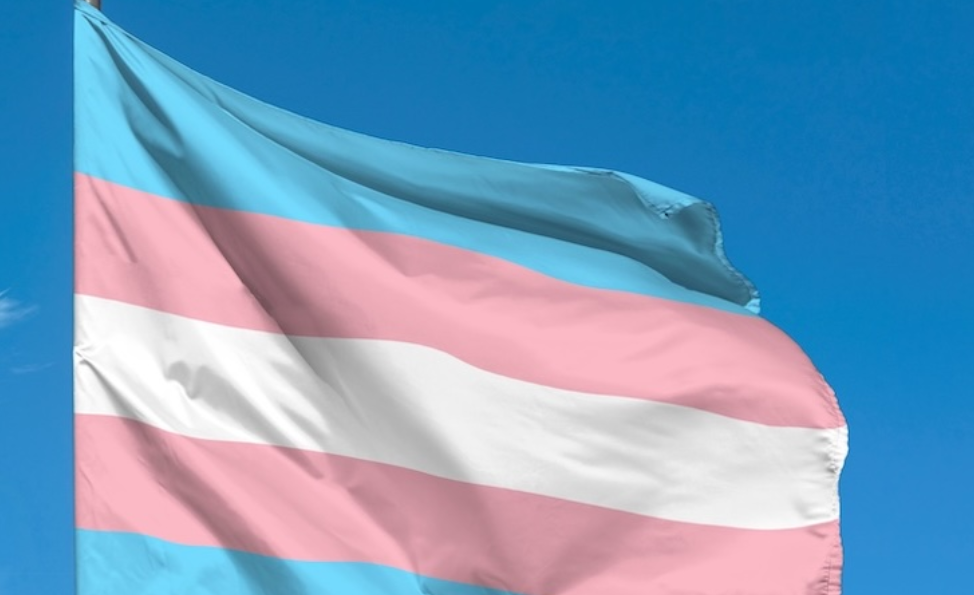

At the end of April 2026, the Querétaro Congress approved the Gender Identity Law, which guarantees the right to rectify data—gender and name—before the Civil Registry according to an individual’s self-perceived identity.
And everything was okay. The decision was received by civil organizations as a step forward in the recognition and confirmation of the rights of trans and non-binary people in Querétaro.
However, nearly a month later, the governor of Querétaro, Mauricio Kuri, decided to veto this law—or series of changes to several articles of the Civil Code—using false information.
The governor of Querétaro’s veto of the Gender Identity Law
Mauricio Kuri published a video on his social media to announce the veto of the Gender Identity Law, in accordance with his constitutional powers.
Kuri claimed that the entire matter was a supposedly “ideological” issue—note that this concept is often used to misinform and deny the rights of LGBT+ communities—driven by the “radical left,” so he was not going to allow its supposed imposition.
Regarding children, Kuri assured that under the Gender Identity Law, boys and girls could change their sex on their birth certificate—because this ruling supposedly opened the doors to make that modification.
Which… is not true. And it is enough to take a look at the initiative approved by the Querétaro Congress.
What the Gender Identity Law says
In reality, it consists of a series of changes to the Querétaro Civil Code. Changes to Article 2, and the addition of Articles 131 Bis, 131 Ter, 131 Quater, and 131 Quinquies.
All of this was the result of an initiative presented by the president of the Querétaro Human Rights Defense Office, Javier Rascado, and a proposal to change the Civil Code.
Efforts were combined, and the result was the so-called Gender Identity Law.
You can consult it here at this link, and looking closely at it, nowhere are children or adolescents mentioned.
The law applies to adults—even following criteria established by the SCJN (Suprema Corte de Justicia de la Nación). In other words, it does not bypass the rules.
Here are the changes to Article 31, which lists among the requirements for changing a birth certificate: being of Mexican nationality, being of legal age, and having the birth certificate registered in any state of Mexico.
The reactions
The Querétaro Human Rights Defense Office reaffirmed the importance of this law as a way to guarantee the recognition of gender identity within legislation.
For his part, the president of the Board of Directors of the Querétaro Congress, Sinuhé Arturo Piedragil, explained that the approved ruling—once again—only applies to adults.
“There is no provision that allows or facilitates procedures for children and adolescents.”
He pointed out that the governor’s statements were inaccurate and only generated unnecessary confusion, while also asking Kuri to rectify them.
The Morena bench in Congress also recalled the importance of this ruling given the legal vacuums that exist for trans and non-binary people regarding property, administrative, and family matters.
Why is it important?
Because it is a denial of the right to identity, and therefore, Querétaro would be violating the rights to equality and non-discrimination of non-binary and trans people.
What will happen? Kuri will return the initiative with his observations so that Congress can review and vote on it. In other words, that veto does not yet permanently apply.
Católicas por el Derecho a Decidir (Catholics for the Right to Choose) recalled that identity is not to be debated, conditioned, or vetoed, and in fact, rights should not be conditioned by hate speech or misinformation.
Source: sopitas