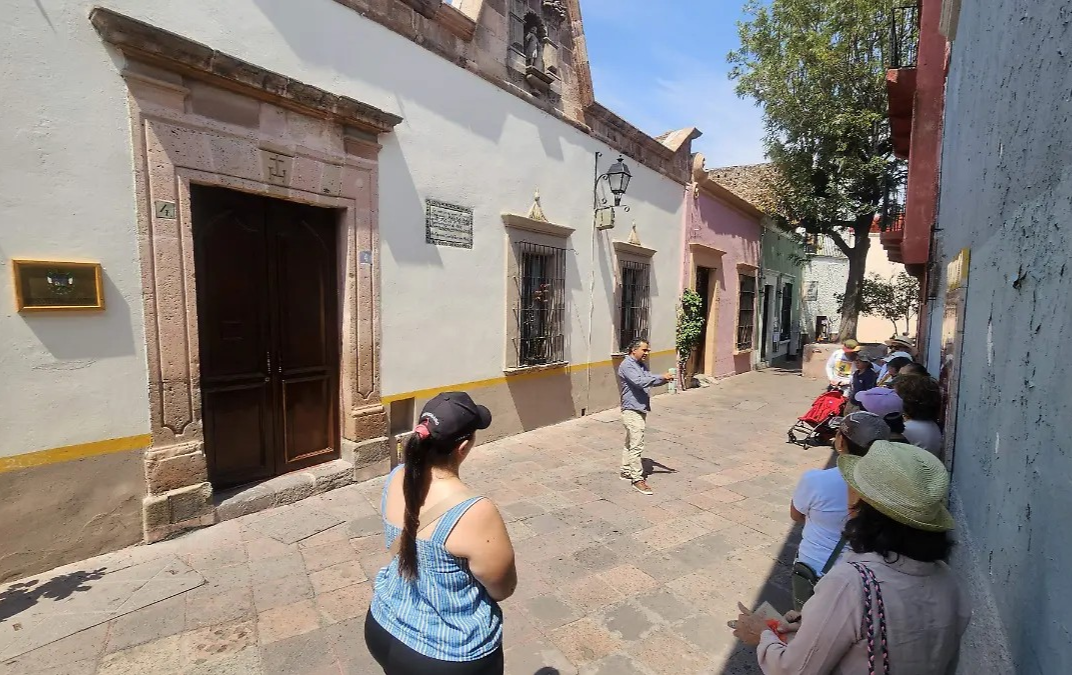

Exploring the Historic Center of Querétaro can feel like a journey through time. Amidst its streets and buildings, spaces still remain that bore witness to some of the most pivotal moments in the country’s history. Today, they form part of the urban landscape; yet, more than two centuries ago, they served as the setting for discreet meetings among figures who—as the years passed—would come to be known as “the conspirators.”
A few days ago, Diario de Querétaro hosted a historical walking tour led by Jorge Flores, a certified tour guide and director of the Querétaro Histórico Festival. The tour was based on the publication by historian and contributor to this newspaper, José Hurtado: Los queretanos en la conspiración de 1810 (2007).
“The Querétaro conspirators began meeting in 1810. In how many houses? In twelve. The city has undergone transformations over time; for some houses, we know the exact location and can identify them with certainty, while for others, we can only surmise that plotting took place there—and there are still others that no longer exist,” Flores remarked during the tour.
The Querétaro Experimental Festival is not set to return until October.
The meeting point was the Plaza de Armas, situated in front of the Palacio de la Corregidora—now the Government Palace. Before setting off, the guide recounted the underlying causes that fueled the mobilization within New Spain: social inequalities and the weakening of the Spanish Crown following the invasion by Napoleon Bonaparte.
“When Napoleon placed his brother, Joseph Bonaparte, on the Spanish throne, the news sparked chaos throughout New Spain. Viceroy José Iturrigaray convened an emergency council and announced: ‘News has arrived by ship that our King—who had only recently ascended to the throne—Ferdinand, has abdicated in favor of Napoleon, and Napoleon, in turn, has abdicated in favor of his brother.’ Can you imagine the silence? The question now became: ‘What are we going to do?’ No one knew how to proceed until a single deputy raised his hand: Francisco Primo de Verdad y Ramos,” he recounted. Francisco Primo de Verdad y Ramos was a lawyer and one of the earliest precursors of Mexican Independence. He is credited with championing the idea of autonomy among the populace, although his initial proposals did not seek to abolish the monarchy.
Primo de Verdad raised his hand and said, “Mr. Viceroy, I have a proposal.” The response was, “Really? Well, speak.” The lawyer explained: “The Spanish Constitution clearly states that if the King is absent—due to illness, death, or other circumstances—sovereignty reverts to the people. In other words, legally speaking, we have the right to form a provisional government while the King remains Napoleon’s prisoner.” The reply came: “Oh, really? And who, then, is going to govern?” To which he responded: “Well, for instance, here in New Spain, it would be you—the Viceroy.” Naturally, the idea delighted him, and things were proceeding smoothly; however—according to historical accounts—Viceroy Iturrigaray committed suicide. Do you really believe that? It is said that certain Spaniards—specifically those of a very, very conservative bent—distrusted him; they viewed him as somewhat corrupt and argued that if he were granted significantly more power, he would inevitably abuse it. Consequently, they removed him from office, and Primo de Verdad assumed the regency—a body composed entirely of those very conservative Spaniards. “Eventually, Pedro de Garibay was appointed as the new viceroy; however, as he proved ineffective, they ultimately chose Archbishop Francisco Javier de Lizana y Beaumont to serve as the new viceroy,” he added.
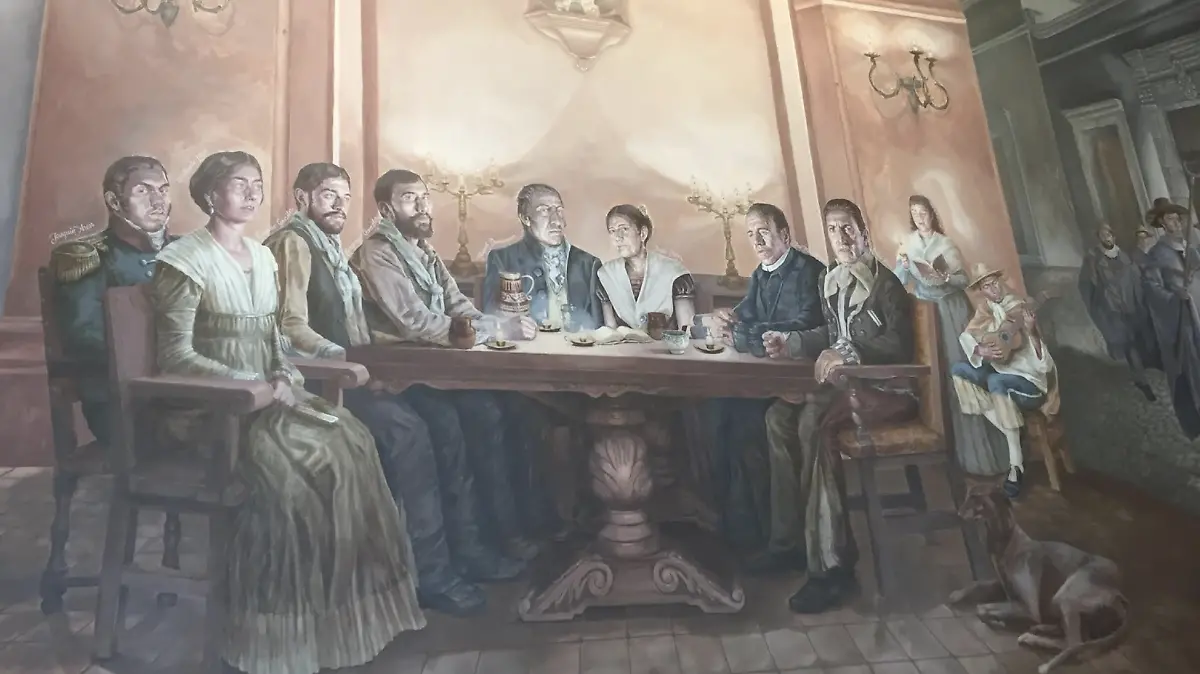
The Querétaro Conspiracy: For their participation in the struggle, many women were tried, imprisoned, and even executed by firing squad.
For their participation in the struggle, many men were tried, imprisoned, and even executed by firing squad. / Photo: Archive / Diario de Querétaro
At this juncture, Flores highlighted a concept that began to gain traction among the inhabitants of New Spain—particularly among the criollos (Creoles): the children of Spaniards born on New Spanish soil who, despite their ancestry, enjoyed fewer privileges than those born in Spain. That concept was the idea that sovereignty had reverted to the people.
“When this idea appeared on the radar, people on the streets began saying: ‘Hey—we have the legal right to form a government, and one, moreover, composed of Americans!’ or ‘Hey—according to the Constitution…’ And it was precisely this idea that was embraced by a military man—who, incidentally, had a completely crooked nose because he had broken it during a jaripeo (rodeo): Ignacio José de Allende y Unzaga,” he added.
Querétaro launches photography contest with prizes totaling up to 98,000 pesos.
Motivated by the privileges implied by this concept of sovereignty, Allende began to garner support from figures such as Miguel Domínguez and Josefa Ortiz, the brothers Ignacio and Juan Aldama, Joaquín Arias, Emeterio and Epigmenio González, and Mariano Abasolo, among others.
Source: oem